Friday, March 10, 2017

ARCHITECTURE ON THE ISLAND

One of the most distinctive features of Bermuda is the architecture.  Flying in to land at L. F. Wade International, an aerial view displays a sea of white, stepped pattern roofs.   A sight to behold - turquoise seas, lush greenery, and white roofs from one end of the island to the other. 


On the streets, wending your way down narrow roads,  you can see wave after wave of pastel, and brightly coloured houses.  Some homes are three and four hundred years old and are constructed with blocks of limestone, whilst the more modern versions are made of concrete block. 

Most of the designs reflect external chimneys and buttresses, peaked roofs with Flemish gables, low overhanging eaves and top-hung shutters.  Windows come replete with 'eyebrows' and 'lips'.  Front doors are usually solid wood, the older ones being hand-carved.  There is usually a porch with a welcoming stairway.  Gardens are filled with luscious tropical shrubs, palms, banana trees and frangipani trees.   Inside the century homes, there is usually a fireplace, wooden floors and open wooden joists in the ceiling.  Always loads of character and charm.  

St. George - the earliest capital of the island - from sometime in the 1600's - has been designated a UNESCO World Heritage Site.  No owner anywhere in the village is allowed to make any alternations or changes to the inside or outside of their buildings.  Renovations and repairs have to hold true to the original design.  


Not to be outdone, Hamilton, the 'new' capital, certainly has its charms as well. Front Street has its share of beautiful architecture reflected in the sun off the water in the harbor.  There are parks that provide peaceful and calming spots to sit and people watch: Queen Elizabeth Park, Victoria Park, Wesley Park and Barr's Bay Park with their carefully tended gardens, fish ponds, sculptures, and a gazebo or two.  


All in all, Bermuda's urban planners and architects are to be commended for a great job!  Better by far, than many so-called first class cities I have lived in. 

Our sojourn on the island will definitely be remembered for these white stepped roofs and pastel coloured houses.

Wednesday, February 22, 2017

HISTORY OF ST. GEORGE


Unesco describes the history of St. George much better than I could - so here it is for anyone interested:

My contribution - what a wonderful life experience to live in a town that is essentially the same as it looked 300 years ago.

"The Town of St George, founded in 1612, is an outstanding example of the earliest English urban settlement in the New World. Its associated fortifications graphically illustrate the development of English military engineering from the 17th to the 20th century, being adapted to take account of the development of artillery over this period.Some of these are unique as surviving examples of the first defensive works built by early European colonists, few examples of which now remain intact. The later associated forts represent an excellent example of a continuum of British coastal fortifications.

The permanent settlement of St George began in August 1612. The inscribed area consists of the Town of St George on St George Island as well as fortifications on the Island and on a number of small islands commanding access to the Town and to the anchorage of Castle Harbour, at the eastern end of the Bermuda Islands in the North Atlantic. The layout of the Town is one that has grown organically over nearly four centuries. At its heart is King's Square (or Market Square), adjacent to the harbour, and providing the link between the harbour and the two main east-west roads that connect the Town with the rest of Bermuda: Water Street, giving access to the quays, and York Street to the north, the main street of the Town.


The streets to the north provide a network of what began as narrow, winding lanes and alleys. The architecture of Bermuda is unique, and has changed little in its basic elements since the end of the 17th century. Different from other European-founded cities of the New World, St George has maintained the individually separated house for habitation, so typical of the English settlements in North America. Because of the nature of the soft limestone that continues to be used for construction, walls, including roofs, are white-washed. Buildings rarely exceed two storeys and many are only one storey in height. Since sources of water are scarce on the island, the white colour of the roofs and pitch are designed to collect rain water into cisterns through gutters and other conduits adding to the unique appearance of the Town.

St George was a garrison town from its earliest days, and military installations developed on the eastern side of the Town. The first of many barracks were built on Barrack Hill in 1780, and ancillary buildings, such as residences for senior officers, officers' messes, hospitals and a garrison chapel followed during the course of the 19th century. These were constructed in the standard British military style but using local materials. The related fortifications began in the early 17th century, with forts on Paget, Governor's, Charles, and Castle Islands. These were repeatedly reconstructed and strengthened during the course of the 17th and 18th centuries.


At the end of the American Revolution, Britain made St George's Island its main New World naval base. The existing fortifications were radically redesigned and rebuilt in the 1780s and 1790s. Work began on the dockyard at the turn of the century, necessitating further drastic changes in the system of fortifications, with the construction of Forts George, Victoria, St Catherine, Albert, and Cunningham (on Paget Island). The advent of rifled artillery in the 1850s led to yet further modifications and strengthening of the fortifications.

http://whc.unesco.org/en/list/983


Tuesday, January 31, 2017

BERMUDA MYSTERY ROSES


Many years ago, settlers to the land of Bermuda brought roses from their homelands to plant in the landscape. 

As the story goes, the history of the roses were lost, thus becoming "mysteries".


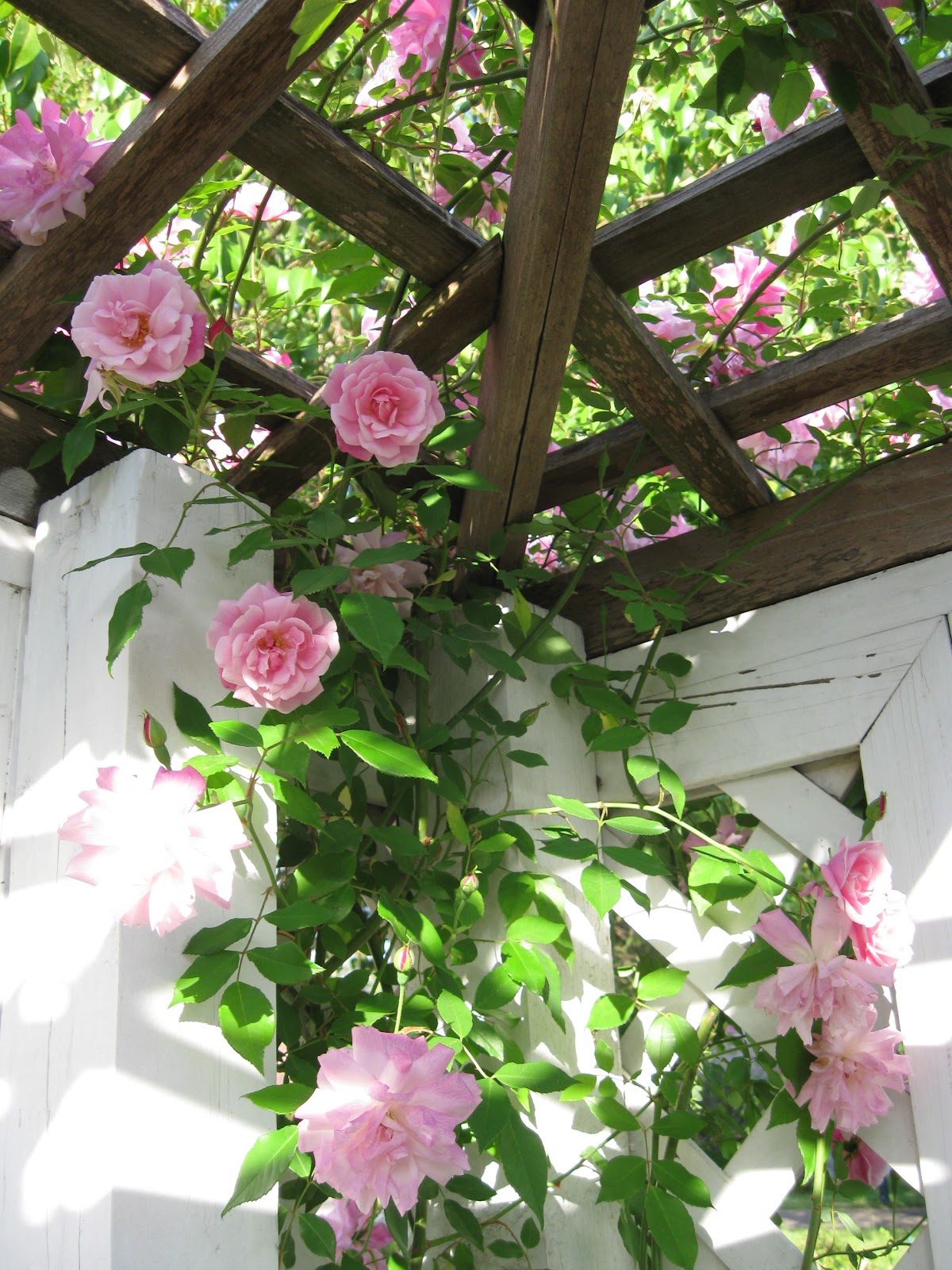
The rose bushes are everywhere on the island - nearly every garden and park seems to display at least one vibrant rose.  The Botanical Gardens are especially lovely with their sweeping gardens and green rolling lawns. 


The roses start blooming in October in a wild array of colours and types - heavy headed multi-petal blooms and the delicate single circle.  They climb vigorously over walls and hang from pergolas in glorious abandon.

As you walk by, the heady scent of flora catches your breath.  No wonder there is a perfumery on the island.

Ah, everything coming up smelling like roses!


Monday, January 16, 2017

SMALL THINGS DO MATTER


A recent encounter on one of my weekly bus rides to Hamilton got me thinking of how different communities and cultures can be.

The first incident involved an older couple and the female bus driver.  Heavyset septuagenarian wife gingerly lumbers onto the bus,  cataracts plain to see, and a white cane mapping out her forward movement.  She raises her cane and hollers out to her fellow passengers:  "Hello, all you church going people".  Various greetings can be heard from the people around me:  "Amen", "Morning", "Hello". 

Husband brings up the rear holding her waist and directing her from behind.  He places her carefully in a seat about 3 rows from the front.  He then proceeds to the front of the bus and sits himself down right at the door.  The bus driver glances over to him and waits.....nothing happens.  We're all wondering about the delay.  30 seconds go by and bus driver finally remarks - "Go and sit with your wife, sir".  The bus doesn't move for about another 2 minutes in an apparent standoff.  He finally mutters to himself and hauls himself back to the seat next to his wife.  Bus driver nods her approval and puts the bus in gear and we jerk away from the bus stop to continue our ride into town.  


On the homeward journey, I notice an elderly woman heaving two shopping bags filled to the brim with groceries.  They look heavy and cumbersome and she takes a seat right at the front of the bus.   Thirty minutes later in the village of St. George she presses the bell to indicate she wants the next stop.  Once the bus has come to a standstill she takes some time to gather her belongings and make her way off the bus.  We are just about to pull off when someone from the back shouts "Wait".   A man walks forward and says to the bus driver:  "We can't have this, I will take her bags and walk her home and then catch the next bus again".   And off he goes.  No one appears surprised - his act of kindness taken as an everyday event.

It got me thinking - on one return trip I was witness to reciprocated friendliness, respect and kindness, and standing up for what is right.  In this day and age it would be a very rare event for kind interactions to take place between strangers in a North American city. In fact, the person would most likely be viewed with suspicion.  A general mentality that would probably question "Why are they doing that? What's in it for them?"   I would place a bet that these days there is no rush of gentleman to give up their seats for pregnant women and the elderly and infirm, let alone prodding others to be kind, or giving up their time to carry heavy shopping bags home for a stranger.

We seem to have enveloped ourselves in an impenetrable glass box that screams "Keep your distance - don't talk to me, don't touch me".  We have learned to close ourselves off from anyone who does not "belong to our group".  Consideration of others, and overt acts of kindness aren't seen too often on our highways, or in our malls or neighbourhoods. 


It seems to be a "each person for him/herself" philosophy and I am saddened by the contrast of the islander who is usually friendly and polite to anyone they encounter;  and the silence and suspicion so prevalent in the anonymity and indifference in a big metropolis or urban cities on the mainland.  

I think our basic humanity has been eroded in the process.  A pity that as our population grows, we become more distant and cut off from each other.  Kindness and respect should be a cornerstone of any society, no matter how big or diverse. 

I will follow the example of my fellow islanders who continue to teach me that the little things do matter. 

Wednesday, December 14, 2016

MOONGATES IN BERMUDA


Bermuda is immersed in a strong history of iconic architecture.  An outstanding feature of the local architecture is the moongate.  They are dotted all over the island, looking much like magical archways leading to Neverland.  Some are at hotels and public parks, whilst others form entrances and gateways to private homes.  

They are all beautiful in a variety of ways.  You have to admire the skill in craftsmanship - masons carving the local limestone called Bermuda stone - a very heavy and solid rock that must have been difficult to work with.  Then the beauty of the circular shape, and the talents it must have taken to construct.  Similar to the rounded ceilings of cathedrals in the home country, just on a smaller scale.  According to articles and tourist literature, the first plan for one in Bermuda was brought from a Chinese garden in 1860 by a local sea captain. He drew the design of a circular, ornamental wooden gateway to a garden or place of inner repose and, once back in Bermuda, built one of his own.  It quickly caught on and is now considered to be a national symbol of Bermuda. 


Legend has it that people who walk through a Bermuda Moongate, especially young lovers and honeymooners, are blessed with good luck.  Islanders believe that if a couple walks hand-in-hand through the archway, they will be blessed with happiness and good fortune throughout their marriage.  The circular structure has come to symbolize happiness, unity and peace. 


Songs have been written about moongates: an older one called "Step Through a Moongate" composed Ralph Blane.  (Unfortunately, I can find no recording - and here was me thinking that You Tube stored everything).  There is a more modern song by a black metal band called Samael from Switzerland, who wrote a heavy metal song that includes the words
"Step in, break through, take the stairs to the stars;
Stretch out your life, make it big, make it large"


Sounds like a good way to look at life I think. 
Onward to the moongate I say!

Monday, November 7, 2016

EXPLORING THE CHRYSTAL CAVES


There are hundreds of caves and caverns in Bermuda, with the most famous of all being the Chrystal Caves.  They are the largest on the island and a 'must see' destination for any tourist.  

Guides presented us with wonderful stories and interesting historical and geological information about the caves.  According to islanders the caves were discovered by two young boys.  They descended into the vast cavernous and pitch black darkness with only a lamp from a bicycle to look for their cricket ball - and found a subterranean wonderland. 


  According to Tourism Bermuda: "In 1908, the celebrated author of The Adventures of Huckleberry Finn and The Adventures of Tom Sawyer became the first tourist to descend into the Crystal Caves.  “We visited a wonderful cave …” he wrote in a letter. “The most beautiful cave in the world, I suppose. We descended 150 steps and stood in a splendid place 250 feet long & 30 or 40 wide, with a brilliant lake of clear water under our feet and all the roof overhead splendid with shining stalactites, thousands and thousands of them as white as sugar, and thousands and thousands brown and pink and other tints.” 
Like Mark Twain, we were mesmerized.  The caves provide an awesome display of Picasso type stalagmites and stalagtites.  Strategic lighting shows off  striations of ruby red, coral pink and luminescent white natural sculptures.  The only sounds to be heard are the occasional plink plonk of a drop of water as it hits the surface of pools.  The water is calm and deep in hues of aquamarine blue.   No fishes and no plant life can be seen - the stillness is almost tangible.

No swimming allowed - no reason to disturb formations that have stood without blemish since the Ice Age.   Scuba divers fromTexas A & M have explored the caves and found passages between them, but they are not for public viewing.  The elite team of divers were on the island as part of an expedition to survey the outer edges of Bermuda’s sea mount and collect data on cave organisms.


A beautiful and natural amphitheatre filled with exquisite chandeliers and sculptures to be visited as many times as we can.


Friday, October 28, 2016

YOU KNOW YOU LIVE ON AN ISLAND WHEN....


*   you are within walking distance of the ocean no matter where you live

*   you enjoy summerlike weather on most days of the year

*   you are not surprised to find skinks and spiders on your interior walls

*   you can climb on any bus and it will eventually get you to the city (euphemism for small town)

*   you have no access to franchised food joints anywhere

*   you discover sea sand can get into all sorts of unexpected niches - like cameras, sandwiches and ears and always coupled with never ending sweeping

*   'manana' has become both an art form and a fashion statement

*   you don't have any winter coats in your closet

*   you drive on laneways that are so narrow you have to pull over for buses or large vehicles

*   you never see big rigs and tractor trailers on the roads as they would never fit

*   you know you'd have a hard time being a 'missing person' for long

*   you realize that  you are surrounded by as many boats and yachts as there are houses

*   you pass people on the street and almost without fail, they greet you with "Good Morning/Afternoon, how are you?" 

*   a traffic jam consists of ten cars waiting at the traffic light at 4.30 pm

*   when peak hour driving lasts for half an hour

*   you can't find a freeway or highway anywhere

*   you are surprisingly content to drive along at the 35km per hour speed limit because of   narrow roads and constant s-bends  (maybe just a tad over the limit)

*   you notice everybody seems to know everybody else

*   you know there's a cruise ship docked because the population almost doubles in size

*   you see wide loads delivered by tug rather than by truck

*   honking horns is a tribute to friendship rather than a warning of danger

*   you get used to seeing grown men in colourful shorts, long socks, ties and jackets 

*   you are pitifully grateful when the internet doesn't crash at least once a day

*   you become immune to the price of fresh fruit and vegetables

*   you time it so that you buy your fruit and vegetables the day after the container ship has docked from the mainland 

*   you can jump for joy because your personal tax rate is 5%

*   you don't have to join a gym to exercise as there are plenty of places to walk or swim nearby

*   you come to terms with the knowledge that 'island fever' really does exist

*   you can't believe just how relaxed you can feel


Take me to the island!